Compare single vs double ATV tours in Cabo San Lucas. Find desert trails, beach routes, age limits, combo deals, and booking tips for your ride.
Who ATV Tours Suit Best
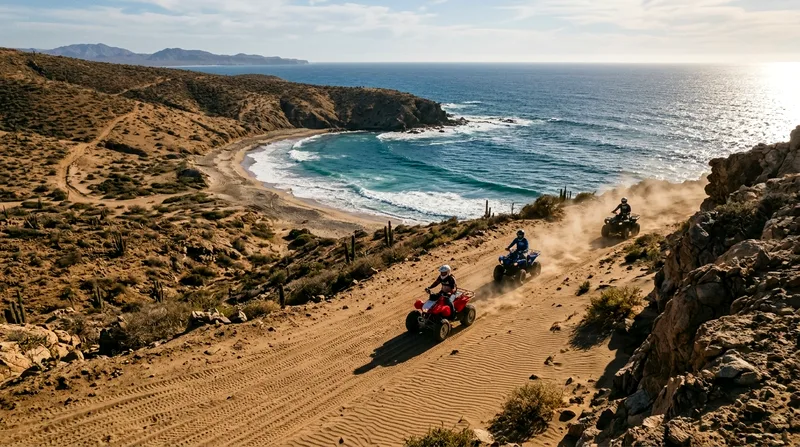
Cabo San Lucas ATV tours work because the terrain around town is built for them. Within twenty minutes of the marina you hit real desert — rutted arroyos, cactus-studded hills, loose sand — and within the same distance in the other direction you hit open beach along the Pacific. That combination is rare. Cancun and Playa del Carmen have jungle cenote tours but nothing like this desert-meets-ocean riding terrain, and Puerto Vallarta's ATV routes tend to be jungle and river crossings rather than dunes.
The appeal is physical, not passive. You're not sitting in a van looking at scenery; you're gripping handlebars, reading sand, and getting sprayed with dust. That makes it a poor fit for anyone wanting a relaxed, air-conditioned tour day. If your idea of adventure is a catamaran with an open bar, skip this and look at Cabo's sunset sailing trips instead.
Fitness matters more than people expect. You don't need to be an athlete, but you do need decent core strength and the ability to grip and steer for two to three hours under sun exposure that regularly hits 85–95°F (29–35°C) between late spring and early fall. Anyone with lower back issues, recent surgery, or vertigo should talk to the operator before booking — bouncing over desert ruts for an hour is not gentle on the spine.
Solo riders and thrill-seekers
Solo travelers get the most out of a single ATV tour because there's no passenger to negotiate speed or route with. You control the throttle, you pick your line through the sand, and guides generally let confident riders hang near the back or front of the pack depending on pace. If you've ridden a dirt bike, snowmobile, or even a mountain bike aggressively, a single rig will feel intuitive within the first ten minutes of a guided desert loop. Most operators cap group sizes around eight to twelve riders per guide, which keeps the pace reasonable without making you wait constantly for stragglers.
Couples and family groups
Couples split roughly evenly between single and double setups — it depends on whether both people want to drive. Families with teens usually need a mix: an inexperienced 14- or 15-year-old typically rides as a passenger on a double with an adult driving, since most companies won't let minors operate a single ATV solo regardless of height. If you're traveling with grandparents or anyone unsteady on their feet, ask specifically about the double ATV's seat height and step-up — some rigs sit higher than others, and getting on and off repeatedly on a bumpy trail adds up.
Single vs Double ATV Tours
This is the real decision point for most bookings, more than desert versus beach. A single ATV puts one rider in full control of one machine. A double ATV seats a driver and a passenger on a slightly larger frame, usually with a backrest and footrests for the second person. Both run the same trails with the same guide, so the terrain experience doesn't change — what changes is cost, control, and how tired your arms are afterward.
Single ATV rentals generally run somewhat higher per person than the per-person cost of a shared double, since you're renting a whole vehicle outright rather than splitting one machine's rental cost between two riders. Expect single tours in the neighborhood of $75–120 for a half-day desert route, with doubles often priced close to $90–150 total for two people — but these figures shift by season and operator, so treat them as rough bands and confirm current numbers when you book.
Choosing between a single or double ATV matters more for your experience than choosing desert or beach terrain.
Cabo San Lucas ATV tours compared: single vs double, desert vs beach
| Tour Type | Typical Duration | Rider Control | Best For | Relative Cost |
|---|---|---|---|---|
| Single ATV – Desert | 2–3 hours | Full, independent | Solo riders, thrill-seekers | Higher per person |
| Double ATV – Desert | 2–3 hours | Shared, driver-led | Couples, parent + teen | Lower per person |
| Single ATV – Beach | 1.5–2.5 hours | Full, independent | Confident beginners | Mid-range |
| Double ATV – Beach | 1.5–2.5 hours | Shared, driver-led | Nervous riders, sightseers | Mid-range, split cost |
| Combo Desert + Beach | 3–4 hours | Varies by leg | Travelers wanting both terrains | Highest overall |
Typical figures based on common half-day tour structures; durations, inclusions and prices vary by operator and season, so confirm details before booking.
Single-rider advantages and experience
On a single, you feel every decision — when to brake before a dip, when to gas it up a dune face. That's the appeal and the catch. You'll arrive back at the lot with forearms and shoulders that know they worked. Guides generally require single riders to be at least 16, sometimes 18 depending on the operator, and most require a valid driver's license or at minimum a government ID. If you've never driven anything with handlebars, ask whether the tour includes a practice loop in a flat lot before hitting the trail — reputable operators build this in; the ones that skip it are worth avoiding.
Double-rider comfort and cost
A double ATV suits a couple where one person is nervous about driving, or a parent riding with a child too young to solo. The passenger does less work and sees more scenery since they're not focused on the trail. The trade-off: the driver carries extra weight through sand and dunes, which makes steep sections slower and occasionally stickier if the bike bogs down in soft sand. Double ATVs also tend to feel less nimble on tight switchback sections of desert trail, so if real off-road thrill is the goal, a double dulls it. For a beach-only route with flatter, firmer sand, the difference matters less.
Desert Trails vs Beach Routes
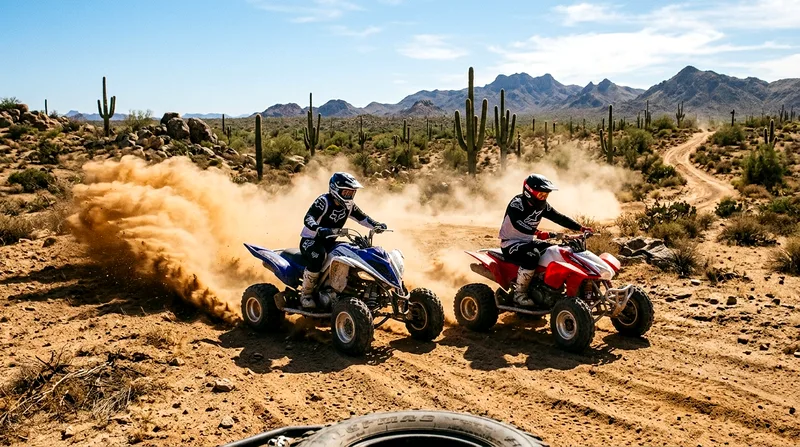
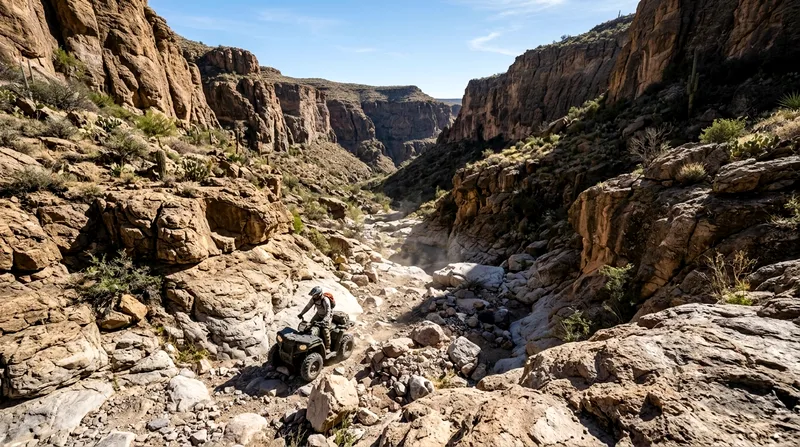
Desert ATV tours around Cabo San Lucas head into the foothills and arroyos of Baja California Sur's interior, where the landscape turns to cardón cactus, dry washes, and the occasional abandoned ranch. Beach routes run along the Pacific side, away from the calmer Sea of Cortez waters near the marina, since riding ATVs on the swimming beaches isn't permitted. The two terrains produce genuinely different rides, and a lot of first-time bookers don't realize how much the choice affects comfort and difficulty.
Desert terrain and difficulty levels
Desert trails are bumpier, dustier, and more technical. You'll climb small dunes, cross rocky washes, and navigate turns where loose gravel can kick the back end of the ATV sideways if you're going too fast. It's genuinely more physical than beach riding and better suited to people who want to feel like they're actually off-roading rather than cruising. Dust is a real factor — goggles aren't optional here, they're necessary, and riding behind the group rather than in the dust cloud is a small trick worth asking your guide about.
Coastal rides and scenic views
Beach routes trade technical difficulty for scenery and smoother riding. Firm wet sand near the waterline is easier to control than loose desert sand, and the views — rocky points, open Pacific swell, sometimes whale activity during winter months — make it the better pick for travelers who want photos more than adrenaline. It's also generally the gentler option for seniors or nervous first-timers. The downside: beach routes can feel repetitive compared to desert trails with varied terrain, and wind off the Pacific kicks sand around even without a vehicle ahead of you.
What to Look for When Booking
Not all ATV tours are built the same, and the difference usually shows up in the fine print rather than the sales pitch. Before you commit, read past the headline description and check three things: what's actually included, how cancellations are handled, and what safety gear is provided versus what you're expected to bring yourself.
Inclusions, group size, and duration
Most tours include the ATV rental, a guide, helmet, and bottled water; some combo packages bundle in snorkeling at a nearby cove or a stop at a tequila tasting on the way back — these combo deals can be good value if you'd book both separately anyway, but skip them if one half doesn't actually interest you. Confirm group size before booking; a guide managing four riders gives a very different experience than one managing fourteen. Ask about total trail time versus total tour time — a "3-hour tour" that includes 45 minutes of hotel pickup and briefing only gives you about two hours on the ATV itself.
Cancellation policies and safety gear
Weather cancels desert and beach tours more often than people expect — heavy rain turns arroyos into mud and closes some routes entirely, mostly a late-summer and early-fall risk during hurricane season (roughly June through November). Look for a policy that allows free rescheduling or a full refund for weather closures, not just traveler-initiated cancellations. On gear, a helmet should be mandatory and provided; goggles and a bandana or face covering for dust should also be included or available to rent cheaply. If an operator's listing doesn't mention helmets explicitly, that's a reason to look elsewhere — San Jose del Cabo and La Paz-based operators serving similar terrain are generally just as strict, so there's no reason to settle for less in Cabo.
When to Book Your ATV Tour
Timing affects both comfort and availability. Cabo San Lucas runs hot and dry most of the year, but the window between November and April offers the most rideable conditions — daytime temperatures in the 75–85°F (24–29°C) range, low humidity, minimal rain risk. Riding desert trails in July or August under full midday sun is miserable even with water breaks, so if you're booking during peak summer heat, push for an early morning departure, generally the 7–9 a.m. slot before the sun gets brutal.
Best seasons and advance booking
Winter and early spring — overlapping with whale-watching season in the Sea of Cortez and off Todos Santos — are the busiest months for Los Cabos generally, which means ATV tours book up faster too. If you're traveling over the Christmas–New Year stretch or during US spring break weeks in March, reserve at least three to five days ahead rather than trying to book same-day at a marina kiosk. Outside peak season, same-day or next-day booking is usually fine, and you'll have more room to negotiate on combo packages. Always compare current ATV tour prices and reviews before you book, since availability and seasonal pricing shift throughout the year.
Frequently asked questions
What is the minimum age for ATV tours in Cabo San Lucas?
Most operators set the minimum age to drive a single ATV at 16, with some requiring 18 and a valid driver's license or photo ID. Younger children can usually ride as a passenger on a double ATV with an adult driving, but age minimums for passengers vary — some operators set a minimum passenger age around 6–8 years old. Always confirm age and ID requirements directly with the operator before booking, since policies aren't standardized across Los Cabos.
Are single or double ATV tours better for beginners?
Nervous first-timers often do better on a double ATV as a passenger, letting someone experienced handle the driving while they get a feel for the terrain. But if you want to actually learn to ride, a single ATV with a guided practice loop before the trail is the better choice — most reputable operators build in five to ten minutes of flat-ground practice before heading into the desert or along the beach.
What's included in a typical ATV tour package?
Typical packages include the ATV rental, fuel, a certified guide, a helmet, and bottled water for the ride. Many also include hotel pickup and drop-off within Cabo San Lucas and San Jose del Cabo. Combo packages may add snorkeling, a beach break, or a tequila or food stop. Goggles and bandanas are sometimes included and sometimes offered as a small add-on — check the listing details before you book.
Can you cancel or reschedule an ATV tour booking?
Most operators allow free cancellation or rescheduling if you cancel 24–48 hours in advance, and weather-related cancellations — common during hurricane season from roughly June through November — are usually rebooked or refunded automatically since the operator cancels the route, not you. Always read the specific cancellation window before paying, since policies differ and some discounted bookings carry stricter no-refund terms.
What's the best season to book an ATV tour?
November through April offers the most comfortable riding temperatures, generally 75–85°F (24–29°C), with low rain risk and good trail conditions in both desert and beach terrain. This window overlaps with whale-watching season and Los Cabos' busiest tourist months, so book three to five days ahead around holidays. Summer tours are doable but better booked for early morning departures to avoid peak heat.