Compare Cabo San Lucas surfing lessons for beginners, families, and intermediates. Group vs. private options, best beaches, and booking tips.
Who Surf Lessons Suit Best
Cabo San Lucas sits at the tip of Baja California Sur, where the Pacific Ocean meets the Sea of Cortez — and that geography matters more than most tourists realize. The Pacific side, running up through San José del Cabo toward Costa Azul and beyond to Cerritos, has real, consistent surf. The Cortez side near the marina mostly doesn't. If a tour or school claims to teach surfing right off the main Cabo beaches, be skeptical; there's a reason instructors drive clients out toward Costa Azul or Cerritos instead.
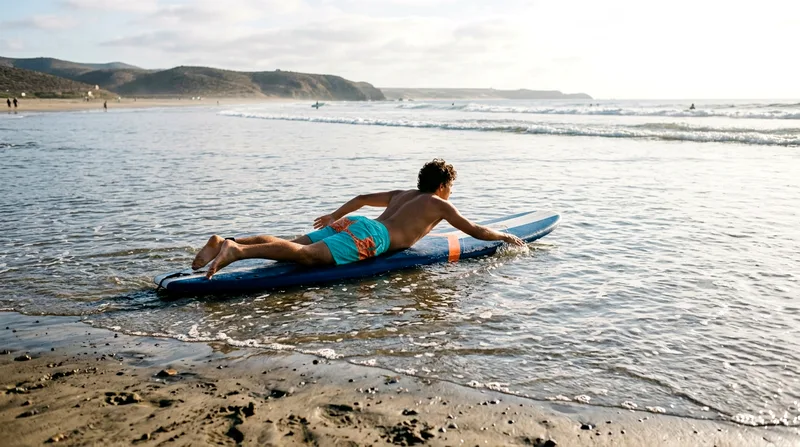
Surfing lessons here work best for people who want a structured, time-boxed introduction to the sport rather than a full surf vacation. A typical lesson runs 90 minutes to two hours, which is enough to get upright on a longboard in whitewater but not enough to actually "learn to surf" in the way a week-long surf camp in a place like Puerto Escondido would deliver. If you're after that kind of immersion, Cabo isn't really the destination — but if you want one or two memorable sessions during a broader trip that also includes snorkeling, a Land's End boat tour, or a day in Todos Santos, it fits well.
Beginners and non-swimmers
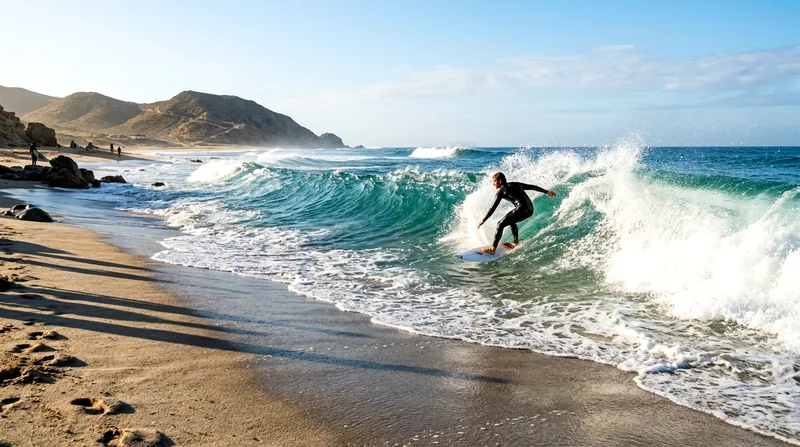
Most first-time surfers in Cabo do fine, provided the swell is small and the beach is right. Costa Azul on a calm day produces gentle, rolling whitewater that's forgiving for someone standing on a board for the first time. Non-swimmers are a different story — instructors will usually require at least basic water comfort, and some schools ask you to confirm you can swim unaided for a short distance before booking. If you can't, say so upfront; a good instructor will adjust the lesson toward flat, shallow water rather than putting you somewhere you're uncomfortable.
Families with kids
Kids from around age 6 up can usually take a lesson, though most family-oriented schools prefer 8 and older for anything beyond standing practice on the sand. Cerritos Beach is the default choice for families — it's wide, the shore break is gentler than Costa Azul's, and there's shade, food stalls, and bathroom access nearby, which matters when you've got a tired 7-year-old at hour two. Expect group lessons for kids to run shorter, often 60-90 minutes, since attention spans (and sunburn risk) drop off fast.
Intermediate surfers seeking progression
If you've surfed before and can already pop up reliably, a standard beginner group lesson will bore you. Look instead for schools offering coaching on specific skills — bottom turns, reading a line-up, paddling technique — usually framed as "intermediate" or "progression" sessions. These tend to run at Costa Azul's point break or further toward San José del Cabo, where the wave has more shape than the mushy whitewater beginners need. Private or small-group instruction is worth the extra cost here, because a coach watching you from the water gives feedback a beach-based beginner instructor simply can't.
Main Surf Lesson Types Compared
Three formats dominate the Cabo surf lesson market: group lessons, private or semi-private instruction, and half-day versus full-day packages that bundle multiple breaks or extra coaching time. None is objectively "best" — it depends on budget, how much personal attention you want, and whether you're traveling solo, as a couple, or with kids.
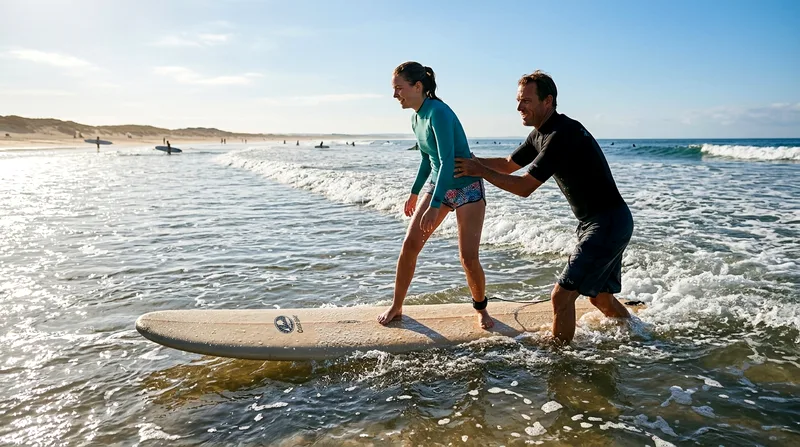
Group lessons are the budget-friendly default for beginners, while private instruction and full-day tours serve specific needs like nervous swimmers or intermediate progression.
Cabo San Lucas surfing lessons compared by type, duration, and who they suit
| Lesson Type | Typical Duration | Group Size | Best For | Typical Inclusions |
|---|---|---|---|---|
| Group lesson | 1.5-2 hours | 4-8 students | Budget-minded beginners, solo travelers | Board, wetsuit or rash guard, basic instruction |
| Private lesson | 1-2 hours | 1 person or couple | Nervous beginners, kids with a parent | Board, full attention, tailored pace |
| Semi-private lesson | 1.5-2 hours | 2-3 people | Couples, small families | Board, shared instructor focus |
| Half-day package | 3-4 hours | Varies | Most first-timers wanting a full outing | Transport, lesson, free surf time |
| Full-day surf tour | 6-8 hours | Varies | Intermediate surfers, multi-beach days | Transport, two sessions, lunch (sometimes) |
Durations and group sizes are typical ranges; confirm current pricing and inclusions directly with the operator before booking.
Group vs. private lessons
Group lessons typically run 4 to 8 students per instructor and last around 90 minutes to two hours. They're the cheapest way in — expect roughly $60-90 USD per person as a general market range, though always confirm current pricing when booking since it shifts with season and operator. The trade-off is obvious: less individual correction, more waiting around for your turn on a board. Private lessons flip that. One instructor, one student (or a couple), full attention, often $120-180 USD for a similar time block. For a nervous beginner or a parent wanting to surf alongside one child, private is worth it. For a group of friends who don't mind sharing the spotlight, group lessons are perfectly fine and noticeably cheaper.
Half-day and full-day options
Half-day packages, usually 3 to 4 hours including transport, instruction, and some free surf time, suit most visitors. Full-day options — sometimes marketed as "surf tours" that hit two beaches, like a morning session at Costa Azul and an afternoon stop at Cerritos — exist mainly for intermediate surfers who want variety or families turning the day into a beach outing with lunch included. For a first lesson ever, a full day is usually overkill; your arms will be done after 90 minutes of paddling regardless of how the package is sold.
What to Look for When Booking
Not every operator advertising "surf lessons" in Cabo San Lucas is equally qualified, and the gap matters most in the water, not on the sand. Before you hand over a deposit, check a few things that separate a solid lesson from a wasted morning.
Instructor qualifications and group size
Look for instructors certified through a recognized body — ISA (International Surfing Association) Level 1 or 2 certification is the most common standard referenced by Mexican surf schools, and it typically includes water safety and CPR training. If a listing doesn't mention any certification or safety credential, ask directly before booking. Group size matters just as much: a "group lesson" with 12 people and one instructor is a different product than one with 4. Anything over 6-8 students per instructor starts to feel more like a photo op than real coaching.
Equipment, cancellation policy, inclusions
Soft-top foam boards are standard for beginners — they're safer and more forgiving than fiberglass, so don't be surprised or disappointed if that's what you're handed. Rash guards or wetsuit tops are often included, but reef booties aren't always, and they're worth asking about if the lesson is at a beach with rocky entry points. On cancellations: Cabo's swell and wind can turn unsurfable with little warning, especially during summer hurricane season, so check whether the operator offers a weather reschedule or refund rather than a flat no-cancellation policy. A reputable school will reschedule for free if conditions go flat or dangerous — one that charges you regardless of surf conditions is a red flag.
Best Time to Book Lessons
Timing affects both wave quality and how crowded the line-up gets, and Cabo's surf season doesn't run on the same calendar as its whale-watching or sportfishing seasons — worth knowing if you're stacking activities into one trip.
Seasonal swell and weather patterns
Roughly April through October brings the most reliable south-facing swells to Pacific breaks like Costa Azul and Cerritos, driven by southern hemisphere storm systems. Winter months (November through March) can still produce good surf from north Pacific swells, but it's less consistent and water temperatures drop — a wetsuit top becomes more useful than optional. Hurricane season, roughly June through November, occasionally shuts down lessons entirely for a day or two when swell gets too big or wind too strong for beginners; it rarely ruins a whole week, but it's worth building a buffer day into your itinerary if surfing is a priority.
Advance booking recommendations
Book 2-3 days ahead during peak travel weeks (winter holidays, spring break, Semana Santa) when hotel-based activity desks and instructors get stretched thin across snorkeling, whale watching, and surf requests simultaneously. Outside peak periods, same-day or next-day booking is usually fine, and it lets you check the actual swell forecast before committing — which beats locking in a lesson three weeks out and hoping for good conditions. Always compare current prices and reviews before you book, since availability and seasonal pricing shift throughout the year.
Top Beaches for Surf Instruction
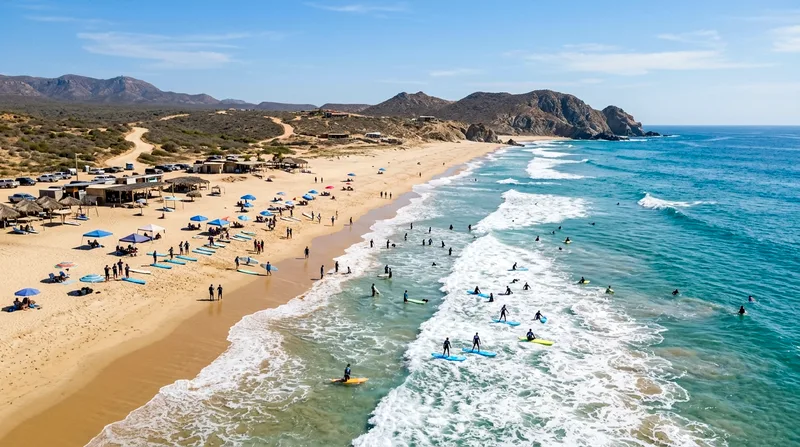
Where your lesson happens matters more than which school runs it. Cabo San Lucas's Pacific coastline offers a short stretch of genuinely different breaks, and matching your skill level to the right one avoids a lot of frustration.
Costa Azul and Cerritos
Costa Azul, near San José del Cabo, is the area's most consistent and well-known break — it has a rocky point (Old Man's) that holds a workable wave even when other spots go flat. It suits beginners on smaller days but can get punchy and crowded with local surfers when the swell picks up, which isn't ideal for a first-timer. Cerritos Beach, roughly 45 minutes to an hour north toward Todos Santos, is gentler and sandier, with a wider, more forgiving beach break. It's the better pick for families, nervous beginners, and anyone who wants a mellow learning environment without dodging experienced surfers mid-lesson.
Palmilla and Chileno Bay
Palmilla Beach, closer to San José del Cabo, sits on the calmer Sea of Cortez side and isn't really a surf beach — it's better known for stand-up paddleboarding and flat-water lessons, so skip it if surfing specifically is the goal. Chileno Bay, between Cabo San Lucas and San José, is similarly calm and better suited to snorkeling than surfing; its reef and clear water make it a strong add-on for a non-surfing day in your trip, but don't book a surf lesson there expecting real waves.
Frequently asked questions
Do I need experience to take a surfing lesson in Cabo San Lucas?
No — most group and private lessons are designed for complete beginners, using soft-top longboards and small whitewater at beaches like Cerritos or Costa Azul. Basic swimming ability is usually required, so mention upfront if you're not a confident swimmer so the instructor can adjust the location and depth accordingly.
What's included in a typical surf lesson package?
Most packages include board rental, a rash guard or wetsuit top, basic safety briefing, and hands-on instruction for the full session length. Transport to the beach and water are sometimes included in half-day packages but not always in standalone lessons — confirm this detail before booking since it affects total cost.
How far in advance should I book a lesson?
Two to three days ahead is usually enough, except during peak weeks like spring break or winter holidays when booking a week out is safer. Booking very last-minute (same day) works outside busy periods and has the advantage of letting you check the swell forecast first.
What's the difference between group and private surf lessons?
Group lessons put one instructor with 4-8 students, cost less, and suit beginners comfortable sharing attention. Private lessons pair you one-on-one (or with a partner) with an instructor, cost roughly double, and make sense for nervous beginners, intermediate surfers wanting specific coaching, or parents surfing alongside one child.
Which beach is best for beginner surfers?
Cerritos Beach is generally the better choice for true beginners and families — it has a wide, sandy beach break with gentler whitewater. Costa Azul works too on small-swell days but can get crowded with experienced local surfers when conditions pick up, which makes it less relaxed for a first lesson.