Cabo whale watching season runs roughly mid-December to April. See the month-by-month calendar, peak weeks, and when to book your tour.
Whale Species and Migration Patterns
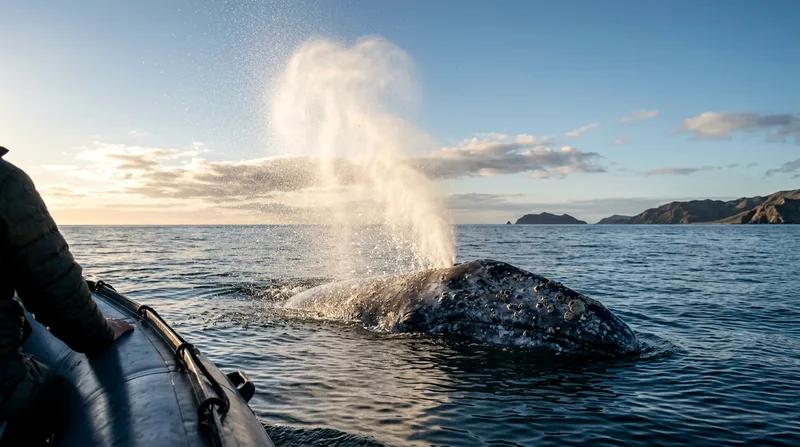
Cabo San Lucas sits at the tip of the Baja California peninsula, right where the Pacific Ocean meets the Sea of Cortez — a geographic accident that makes it one of the better whale watching bases in Mexico, arguably better positioned than Mazatlan or Puerto Vallarta for sheer density of sightings in peak months. Whales use the nutrient-rich waters off the cape as a winter breeding and calving ground after swimming down from feeding grounds near Alaska. That's the entire reason the season exists: it's not random wildlife luck, it's a predictable annual commute.
Humpbacks are the headline act, but they're not the only species you might see. Several types pass through or linger near the cape at different points in the season, and tour operators adjust their routes depending on where pods are reported that week. This is also why a one-size-fits-all "best time" answer is slightly misleading — it depends which species you're hoping to see.
Humpback Whales in Cabo Waters
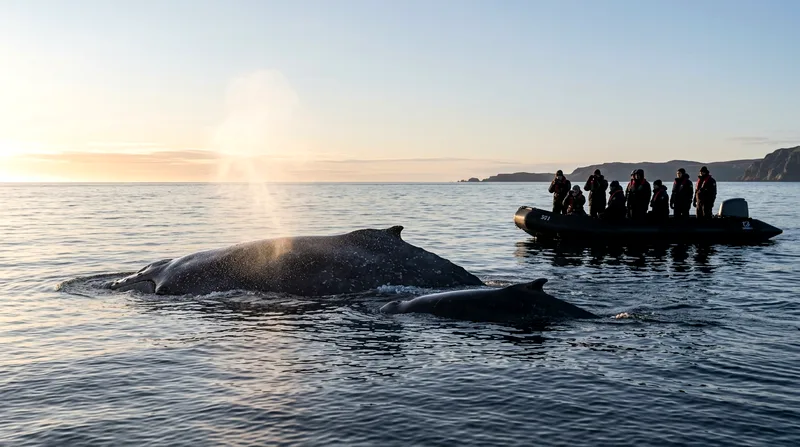
Humpback whales are the main reason people book a Cabo whale watching tour, and for good reason — they're the most acrobatic species in these waters, known for breaching, tail-slapping, and the males' underwater singing during mating season. They arrive from feeding grounds off California and Alaska, a migration of roughly 3,000 miles, to breed and give birth in the warmer waters around the Baja peninsula. Peak humpback presence in Cabo runs from January through March, with numbers building from mid-December and tapering off by early April. Mothers with newborn calves are commonly spotted close to shore in February and March, which tends to produce the most memorable encounters, though boats are required to keep a respectful distance — typically around 100 meters — so don't expect a close approach.
Gray Whales and Other Species
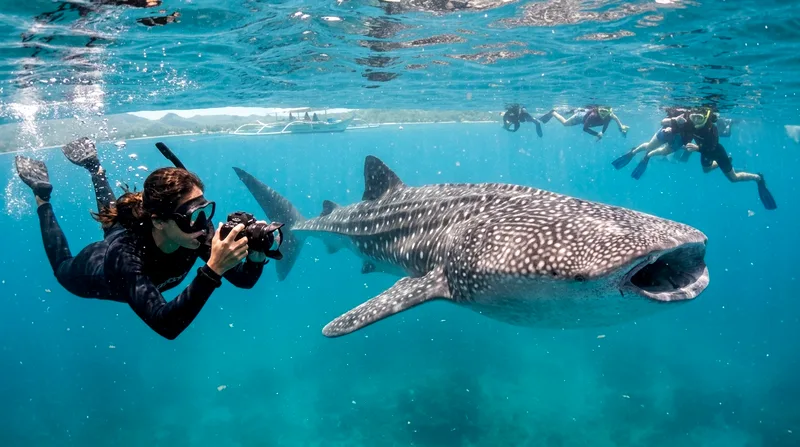
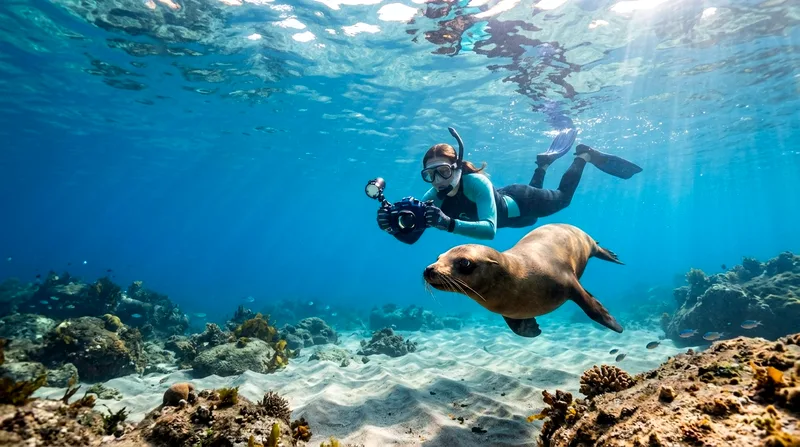
Gray whales are more associated with Baja's Pacific lagoons further north — places like Magdalena Bay and Guerrero Negro — than with Cabo itself, but some do pass within range of Cabo-based boats during their migration between December and April. If gray whales are your priority, a trip combining Cabo with a side excursion toward La Paz or further up the Pacific coast gives better odds than staying in Cabo alone. Beyond humpbacks and grays, you may also spot blue whales, fin whales, and pods of dolphins year-round in the same waters, plus sea lions near Land's End. Whale sharks are a separate, warmer-season sighting near La Paz, not Cabo, so don't confuse the two when booking.
Peak Whale Watching Season Month-by-Month
The Cabo whale watching season generally runs from mid-December through April, with the bulk of activity concentrated in a tighter window. If someone asks for one answer to "what is the best month for whale watching in Cabo," it's February — numbers peak, calves are visible, and the sea is typically calmer than in December's transitional weeks.
Sightings rise sharply from January, peak in February, and drop off by late April.
Cabo whale watching season calendar by month
| Month | Sighting Likelihood | Sea Conditions | Booking Pressure |
|---|---|---|---|
| December | Low to moderate | Variable, building swell | Low |
| January | Moderate to high | Generally calm | Rising, holiday weeks busy |
| February | Peak | Usually calm | High, book 2-3 weeks ahead |
| March | High | Calm, warming | High early, easing late |
| April | Low to moderate | Calm | Low |
Typical figures based on published migration patterns; actual sightings vary by year and weather, so check current tour availability before you travel.
December Through March Peak Months
December is the ramp-up month — whales start arriving mid-month, and sightings are possible but not guaranteed on every outing. By January, numbers rise noticeably, and most tour boats report sightings on the large majority of trips. February and early March are the peak weeks: this is when mothers and calves are most visible close to the coastline, and competitive groups of males sometimes put on surface displays while chasing a female. March remains strong through the first half of the month, then begins to thin out. If you can only pick one travel window, aim for the last week of January through the last week of February — it beats booking in mid-December, when some whales haven't arrived yet, or late March, when the strongest numbers have already started heading north.
Shoulder Season Opportunities
Shoulder weeks — mid-December and all of April — are worth considering if you want lower prices on hotels and flights and don't mind a lower hit rate on tours. April sightings taper off fast; by the last week of April, trips are hit or miss, and by May they're rare. The upside of shoulder season is practical: fewer crowds on the Cabo San Lucas marina docks, easier parking, and tour boats that aren't fully booked out weeks ahead. If you're coming from Europe and juggling a long-haul flight schedule around school holidays, mid-December can be a reasonable compromise, even if the odds are a notch below peak February.
Tour Availability and Booking Timeline
Whale watching in Cabo isn't a year-round product the way, say, snorkeling tours in Playa del Carmen are. It's seasonal, which means the booking rhythm matters as much as the sighting calendar. Operators scale their fleets up and down based on demand and whale presence, so the tour landscape in August looks nothing like the tour landscape in February.
When Tour Operators Launch Seasonal Routes
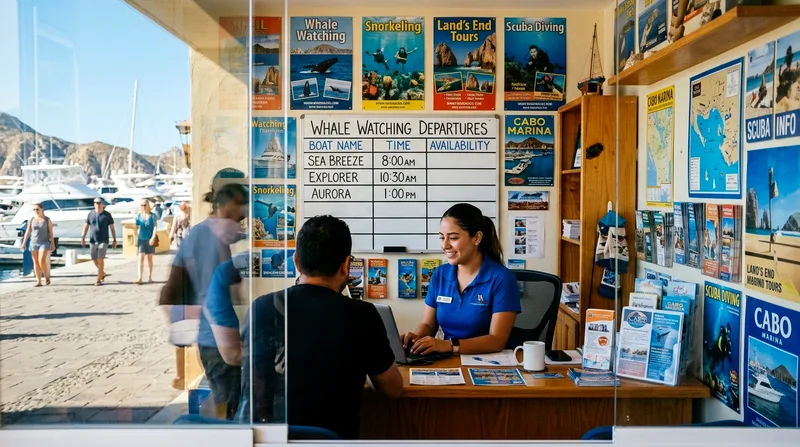
Most Cabo-based operators start running dedicated whale watching departures in mid-to-late December, scaling up through January as both whale numbers and tourist demand increase. By February, many companies run multiple daily departures — morning trips tend to have calmer water and better light for photos than afternoon trips, which can pick up wind chop off the Pacific side. Some operators pause or significantly reduce whale-specific trips by early May, shifting their boats back to general sunset cruises and Land's End/Arch tours instead. If you're traveling outside the December-to-April window, don't expect to find a dedicated whale tour at all — ask specifically rather than assuming it's offered.
Best Booking Windows for Availability
For peak weeks — late January through February, and around Christmas/New Year — booking two to three weeks ahead is a reasonable minimum, and four weeks is safer if you want a specific departure time or a smaller boat. Spring break weeks (mid-March) also get tight because of US family travel. Shoulder months like December and April are more forgiving; you can often book two or three days out and still get a seat. Compare current whale watching boat tours and prices before you book, since fleet size and schedules shift year to year and the live booking widget will show what's actually running that week rather than a guess based on last season.
What to Expect During Each Season
Knowing the calendar is one thing; knowing what the actual boat experience feels like in each part of the season is more useful for deciding what to pack and how to set expectations with kids or older relatives who might not want a rough ride.
Winter Sighting Rates and Conditions
December and early January can be unpredictable. Whale numbers are still building, and Pacific swell is sometimes rougher than later in the season, which matters if you or a travel companion gets seasick easily — smaller pangas feel the chop more than larger catamarans. By mid-January, conditions typically settle, and most trips report at least a distant sighting, if not a breach or tail slap. Dress in layers; mornings on the water are cooler than you'd expect from a desert destination, and wind off the open Pacific side (as opposed to the calmer Sea of Cortez side near the marina) can be sharp even when it's warm on land.
Spring Migration and Activity Levels
February through mid-March is when the behavior gets more dramatic — competitive pods, surface activity, and mother-calf pairs that stay closer to the boats than skittish solo adults often do. Water tends to be calmer than in December, which makes for a smoother ride and better photos. By late March and into April, numbers are clearly declining; you might still see a few stragglers, but tour operators will often be upfront that it's "possible, not likely" by that point. Some tours shift toward combining whale watching with snorkeling or a Land's End stop as a hedge against a no-whale outing, which is a reasonable booking choice if you want to guarantee you see something in the water even without a whale.
Planning Your Whale Watching Trip
Once you've settled on timing, the remaining decisions are about boat type, group size, and how much you care about comfort versus getting as close to the action as responsibly allowed.
Choosing the Right Tour Type
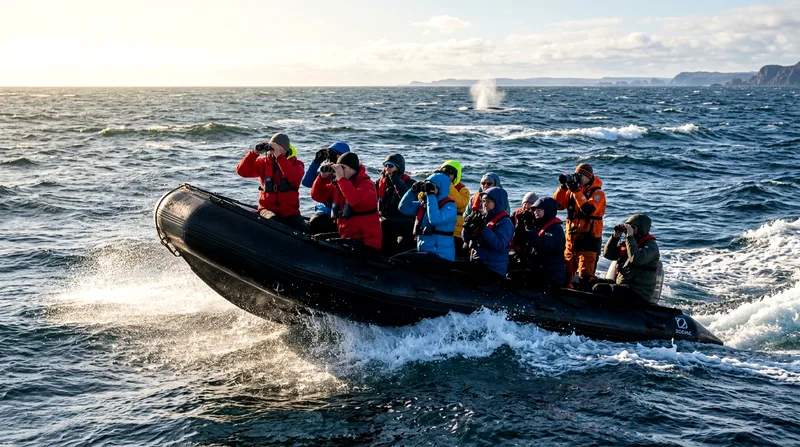
Three broad tour types dominate the Cabo market: small inflatable pangas (6-10 passengers), mid-size cruisers or catamarans (20-40 passengers), and larger sunset-style boats that add whale watching as a bonus during peak months. Pangas get you lower to the water and can maneuver faster toward a sighting, which solo travelers and photographers tend to prefer. Catamarans are steadier and better for families with young kids or senior travelers who want a rail to hold and a shaded deck. I'd skip the big party-boat style sunset cruises if whale watching is your main goal — they prioritize drinks and music over positioning for sightings, and you'll likely see less than on a dedicated 2-3 hour whale tour departing in the morning.
Weather and Sea Conditions by Month
Cabo's dry season roughly overlaps with whale season — December through April sees little rain, which is a genuine advantage over, say, a summer trip to Puerto Vallarta where afternoon storms are common. Air temperatures in January and February typically sit in the low-to-mid 70s Fahrenheit (around 22-24°C), with water considerably cooler, so a light jacket for the boat makes sense even on a sunny day. Morning departures generally mean calmer seas on both the Pacific and Sea of Cortez sides; by early afternoon, wind picks up, especially on the Pacific side where most whale activity concentrates. If you're prone to motion sickness, take precautions before boarding, not after — there's no pharmacy stop once you're a mile offshore.
Frequently asked questions
What is the best month for whale watching in Cabo?
February is the strongest single month, with high humpback numbers, visible mother-calf pairs, and generally calm seas. Late January and early March are close runners-up and sometimes offer better tour availability with slightly fewer crowds.
How long is whale watching season in Cabo?
The season runs roughly mid-December through April, about four and a half months. Peak activity is concentrated in a shorter window, January through March, with December and April acting as lower-probability shoulder periods.
Can you see whales in Cabo year-round?
No. Humpback and gray whale sightings are essentially limited to the December-to-April migration window. Outside that period, dedicated whale watching tours generally aren't offered, though dolphins and sea lions remain visible year-round.
What whale species migrate to Cabo waters?
Humpback whales are the primary species, arriving from Alaska and California to breed and calve. Gray whales pass through the broader Baja region during the same months, along with occasional blue whales and fin whales, though sightings of those are less common from Cabo-based boats.
When should I book a whale watching tour?
Book two to three weeks ahead for peak weeks in late January through February, and up to four weeks ahead around Christmas, New Year, and mid-March spring break. For December or April shoulder-season trips, booking a few days out is usually fine.